
Why this comparison matters
Most ecommerce teams do not need "another AI tool." They need a workflow that can move from product data to publishable assets without constant manual cleanup.
This analysis compares BrandJoy against three common alternatives:
- DIY prompting in model playgrounds.
- Traditional agency or freelancer production.
- Generic AI suites that are not designed for ecommerce operations.
Evaluation criteria
We score each option across the same dimensions:
- Time to first publishable asset
- Consistency across many SKUs
- Team collaboration and review flow
- Cost predictability
- Ability to run repeatable campaigns
Where BrandJoy is differentiated
1. Workflow-first, not prompt-first
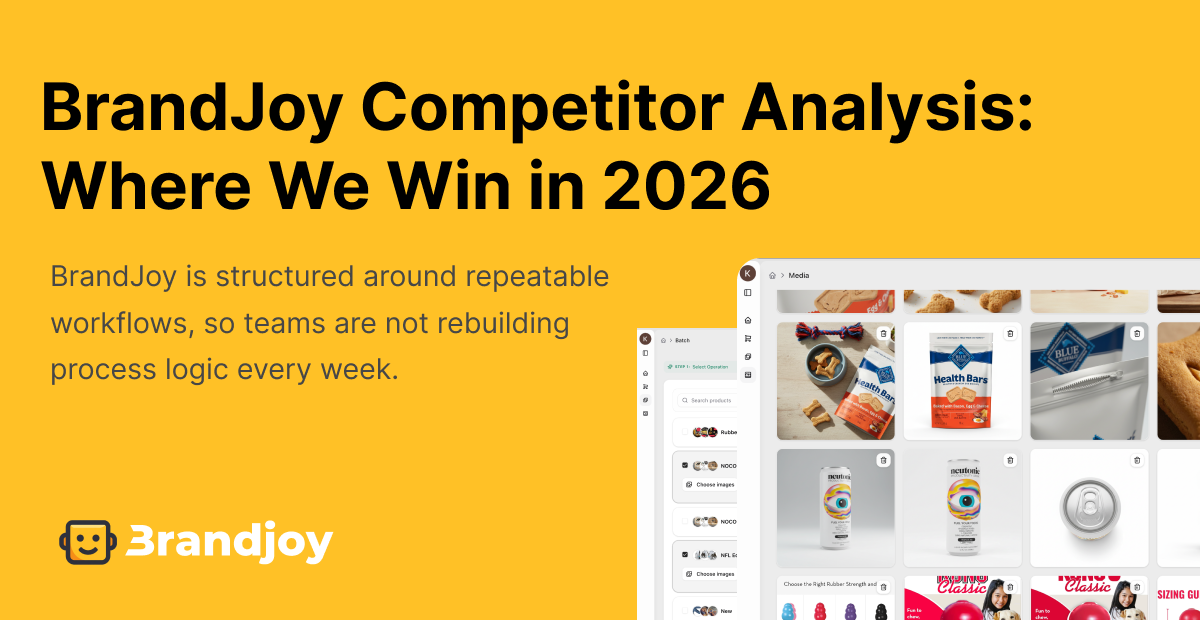
BrandJoy is structured around repeatable workflows (photos, prompt candidates, selected prompt renders, ads, and market analysis), so teams are not rebuilding process logic every week.
2. Better operator control for production teams
Teams can keep provider keys, review generated artifacts, and iterate with structured outputs. This is critical when multiple people need to audit quality and move quickly.
3. SKU-scale consistency
BrandJoy's category-driven prompting and artifact review loops help teams maintain style consistency across large catalogs, which is where most generic tools break down.
Recent product updates that strengthen this
- Faster markdown-driven docs and article publishing flows in-app.
- Improved workflow output review surfaces for teams.
- Better BYOK positioning for provider and cost control.
When another option might be better
- If you only run one-off concept images and do not need repeatable operations, a generic playground can be enough.
- If you need full-service creative strategy plus campaign management, agency support may still fit.
Bottom line
BrandJoy is strongest when teams care about repeatable ecommerce output at production speed. If your bottleneck is consistency and execution velocity, workflow reliability matters more than model novelty.